
Between 27 and 29 May 2026, the Co-CREATE Forum on Solar Radiation Modification (SRM) Research and Governance brought together over 100 stakeholders, including leading researchers, policymakers, experts, representatives from civil society and international organisations, and rightsholders from relevant regions, including the Arctic, to discuss and share insights on SRM research governance.
Over two days in Brussels, participants took part in a highly interactive programme. The agenda included plenaries, thematic roundtables, and co-creation labs. As a result, insightful and productive conversations were held, promoting participatory dialogues that will inform the Co-CREATE project’s final deliverables.
The Co-CREATE Forum was the first conference dedicated to SRM research governance held in Brussels, coming at a critical moment, as interest in SRM research continues to grow, highlighting the need for clear, well-informed governance frameworks.

© John Somers 2026
The Forum opened with a public panel – “SRM Research Governance: An Introduction from Co-CREATE”, which set the scene for the event. Consortium members presented various aspects of SRM research governance within the project, including: an overview of SRM; SRM research and field experiments; international public views on SRM research; and the ethics of responsible SRM research. This provided common ground for the discussions and roundtables for the following two days.

© Climate Strategies Benedetto Valentini 2026
On the second day, a panel discussion on “SRM research governance: what for?” took place, in which stakeholders focused on key themes, including the need for structured and context-aware governance frameworks, the importance of transparency and trust-building, a the reminder that research must be conducted with, and not only for citizens.

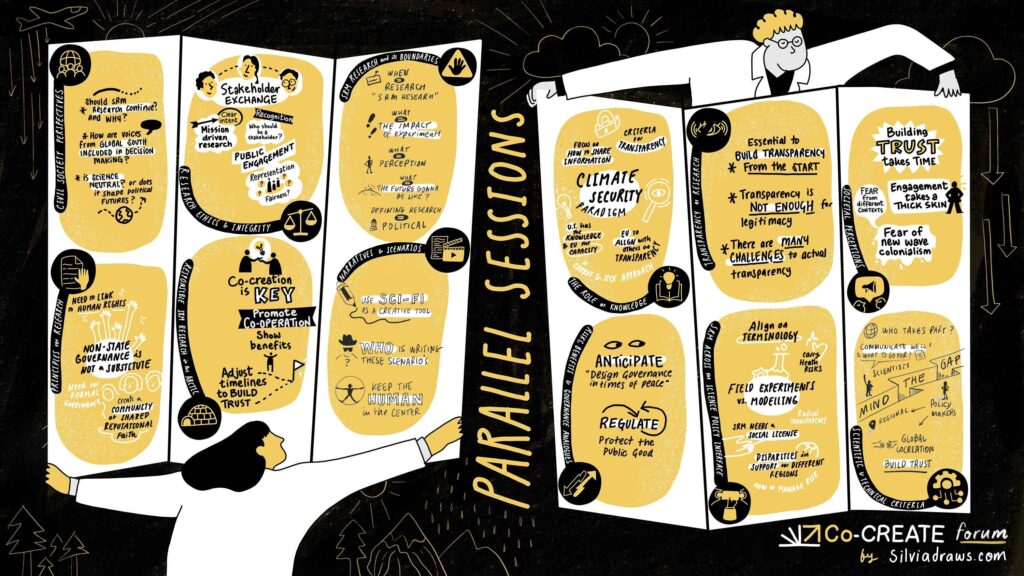
Across the day, there were 12 roundtables, each tackling a specific topic to address some of the most pressing questions regarding SRM research governance, from defining the boundaries of SRM research governance and ethics to geopolitical considerations, Indigenous Peoples’ rights, civil society perspectives, and weighing the risks and benefits of SRM research.
The day closed with a plenary session “Reflections, tensions, and implications for responsible SRM research governance”. This discussion raised critical questions about power structures, the climate-security nexus, and geopolitics, while emphasising that co-creation, agency, and trust-building must be embedded in research governance from the start.
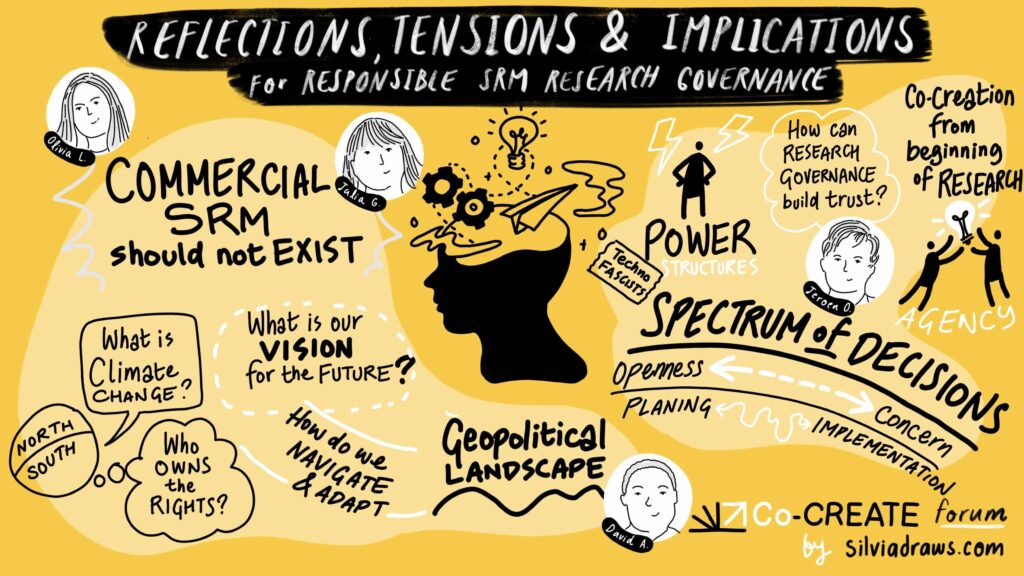
It is important to note that the roundtable sessions and visual notes of this event were held under Chatham House rules. Therefore, the views expressed in this blog post and the visual notes are not attributed to any individual participant of the conference.
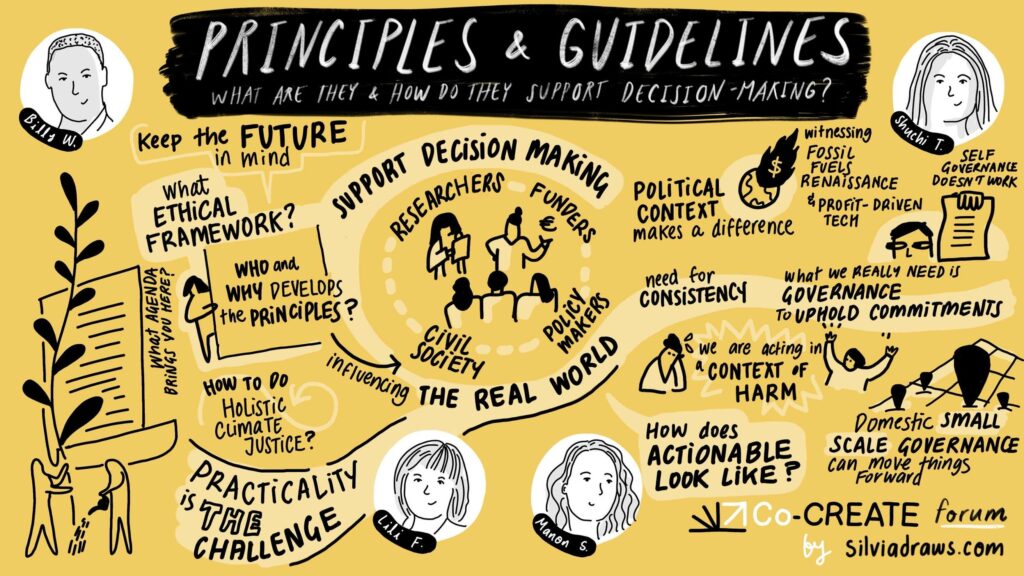
On the last day, the Forum began with an opening plenary session on “Principles and guidelines: what are they and how do they support decision-making?”, where panellists highlighted the need for consistent, inclusive, and actionable governance frameworks, as well as the need for governance to uphold commitments.
Participants then took part in co-creation labs: interactive sessions designed to gather input to inform the development of Co-CREATE’s emerging principles, guidelines, and decision-support frameworks.

Participants during co-creation labs. © John Somers 2026

Co-creation labs synthesis. © John Somers 2026
The Co-CREATE Forum marked a significant milestone in the European and global conversation on SRM research governance, demonstrating that inclusive, cross-sectoral dialogue is both possible and necessary.
By prioritising representation and diverse voices, the Forum demonstrated that emerging governance frameworks are strengthened by including a full range of perspectives. By expressing their concerns, discussing, examining, and reflecting on SRM research governance, participants provided rich insights for the project. These insights will feed directly into a comprehensive set of principles, guidelines, and decision-support frameworks which will act as tools for policymakers, funders, and ethics bodies for responsible SRM research governance aligned with European and global public interests.